Reporting by Rebecca Powell, Fort Collins Coloradoan
While Larimer County has put a moratorium on data centers that will likely be in effect for six more months, that doesn’t cover data centers in Fort Collins and Loveland.
The county is among the many communities across the United States that are grappling with the pros and cons of adding more, and larger, data centers to support technology companies’ push toward generative artificial intelligence.
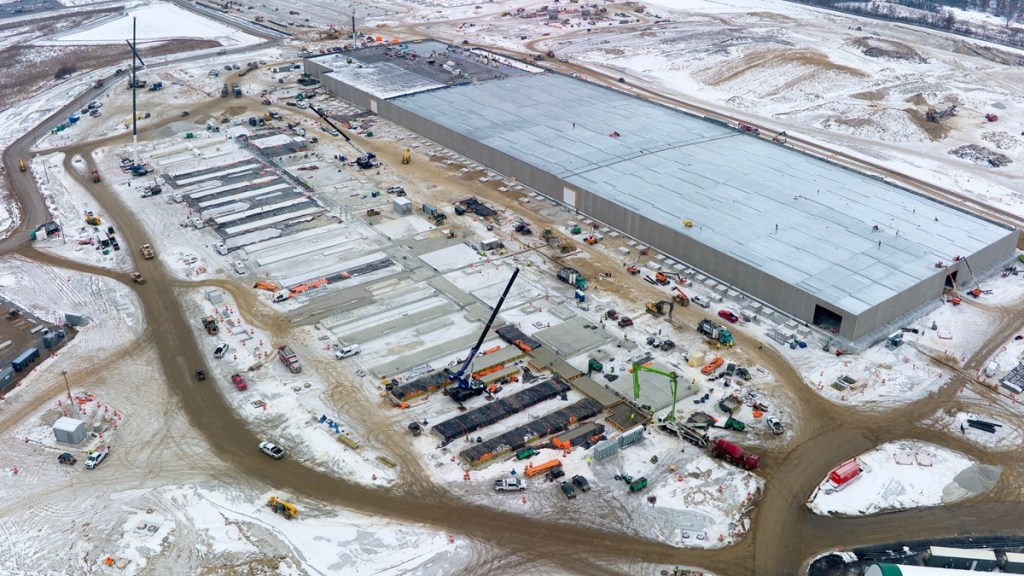
In a recent survey Larimer County put out as part of its research on how to approach regulation of data centers, 94% of respondents said they do not want a data center anywhere in Larimer County.
So could a data center be approved in Fort Collins? And how is the city planning to regulate them?
Does Fort Collins allow data centers?
Fort Collins doesn’t have an official moratorium on data centers. However, its land use code doesn’t define them or list them as a specific use, which essentially prohibits them, according to a memo to City Council members from Ginny Sawyer, assistant to the city manager.
However, there is a path for a developer to ask the city to allow a data center as a new or secondary use.
An applicant would initiate an “addition of permitted use” process, which would then trigger a special review process.
If proposed for a commercial area, the Planning and Zoning Commission would be the decision maker. If proposed for a residential area, the City Council would be the final decision maker.
“I don’t think we’d see a data center go into a neighborhood,” said Clay Frickey, planning director for the city. “That is highly unlikely.”
The review process includes neighborhood meetings and opportunities for public comment.
But whether the decider is the council or the planning commission, the decision will have to be made based on a set of special review criteria, rather than on public support or opposition, Frickey said.
That criteria takes into consideration things like noise, pollution and how a project might fit into and impact the surrounding area, he said.
Are there any proposed data centers in Fort Collins?
So far, there haven’t been any applications related to data centers, and none of the inquiries the city has received has led to formal conversations, according to the memo.
Those informal inquiries were for data centers ranging from 15 to 60 megwatts of energy use.
That might be considered to be average for a data center, but it would be one of Fort Collins Utilities’ largest light and power customers, Sawyer wrote.
Small data centers are generally defined as under 5 megawatts, while hyperscale data centers draw 100 megwatts or more.
The city’s Economic Health Office has not actively recruited data center projects or pursued incentives for them because it’s not a strategic priority for the city, the memo says.
However, a data center could provide benefits to the city through tax revenue and payments in lieu of taxes and could have a positive impact on rates and the general fund.
Data center operations provide only a small number of jobs once construction is complete, but the memo acknowledges that they can be a significant source of tax revenue through property taxes and sales and use taxes, and their equipment upgrades in the future would also be taxable.
Will Fort Collins consider regulating or prohibiting data centers?
No formal action has been taken so far to regulate data centers in Fort Collins.
But Frickey said he suspects the city will want to take a closer look at whether to add data centers as a use “based off the rumblings of the community and the potential desire for a company to locate a data center here.”
Getting city regulations aligned with the county would provide consistency and prevent data centers from pitting the jurisdictions against each other, he said.
“The data conversation is going to be one that is going continue to play out,” Frickey said.
Does Fort Collins have enough electricity and water to serve a data center?
Fort Collins Utilities’ light and power division could serve a data center pulling 15 to 60 megawatts “under the right siting and circumstances, but water availability could be more of a constraint unless a closed-loop cooling system were utilized,” Sawyer wrote in the memo.
That higher limit, 60 megawatts, represents about 19% of Fort Collins’ peak load of 320 megawatts, Kendal Perez, a spokesperson for Platte River Power Authority, told the Coloradoan. The lower figure, 10 megawatts, represents about 3%.
“There are scenarios where the load could be ramped up and down as (light and power/PRPA) need it to absorb cheap wind and solar during the day and conserve when needed. This would save the customer, PRPA and (light and power) money by minimizing generation, transmission and distribution costs, which could then put downward pressure on rates for everyone else,” the memo says.
Fort Collins’ electricity comes from PRPA, which is jointly owned by Fort Collins, Loveland, Longmont and Estes Park.
PRPA has a policy to help it evaluate requests for new large loads, Perez said. It is meant to make sure these customers pay their own way, according to information presented to the board of directors last year.
The power provider’s large customer service tariff requires customers seeking new capacity of 10,000 kilowatts or more (10 megawatts) to enter into a service agreement with the city where they operate and adhere to PRPA’s large load policies.
What’s happening with data centers in Loveland?
It was recently reported by BizWest that a company announced plans to locate a data center in the former Woodward building at 3800 Wilson Ave., owned by developer Martin Lind.
But Loveland hasn’t received any formal applications, according to a social media post by the City of Loveland, and building owner Martin Lind told BizWest the site hasn’t been leased.
Meanwhile, Loveland’s City Council is planning to discuss data centers in detail during a Sept. 1 work session, according to a city social media post. It’s a discussion item only, according to the City Council’s rolling calendar.
Like Larimer County, other nearby jurisdictions have established moratoriums on the development of new data centers, like Denver, Broomfield, Boulder County and Jefferson County, so regulations can be developed.
Longmont has banned hyperscale data centers that have an energy demand of 100 megawatts or more.
Where are nearest data centers in development now?
In Weld County just outside Windsor town limits, GlobalAI is in the midst of that county’s development review process to bring a facility to an existing building at the former Kodak and Carestream site.
The area is zoned light industrial.
GlobalAI’s plan calls for an 18- to 24-megawatt facility in phase one, according to Data Center Map, which says it connects buyers and sellers of data center services.
GlobalAI is planning for multiple phases, which will require separate approvals, and Data Center Map says the company aims to expand to 60 megawatts and could have an eventual capacity of 1 gigawatt.
No specific numbers are mentioned in Weld County planning documents, however.
Poudre Valley REA says it can provide up to 35 megawatts for the initial phase of operation, but that’s expected to decline to 23 megawatts by 2030, according to planning documents. GlobalAI proposes to generate up to 50 megawatts of its own electricity starting in phase two using “Bloom” solid state oxide fuel cells and diesel generation available for backup power.
Water for the site, up to 300 acre-feet, is currently provided by the city of Greeley, but only through March 2027. Carestream sold its water allotment to the Fort Collins-Loveland Water District, and Greeley leased it back so Carestream could close out its operations.
An acre-foot of water is enough to meet the needs of three to four single-family homes in a year.
Future water would depend on the property’s annexation into Greeley, a letter from the the city’s water and sewer department states.
However, Windsor is actively working to annex the site and says it can provide water.
Just across the Wyoming border, which touches Larimer County, five new data centers are proposed, with nine more in advanced stages of discussion, according to Cowboy State Daily, including:
- Google’s Project Tembo, a 2.7-gigawatt project that has new life after construction was halted last month. At that time it was known as Project Jade and being developed by Crusoe.
- Meta is planning for an 700,000-square-foot data center on 945 acres but hasn’t shared its power capacity.
- Microsoft is planning a 3,200-acre expansion of its existing data centers that would triple its existing footprint, according to the Wyoming Tribune-Eagle.
Rebecca Powell covers city and county government for the Coloradoan.
This article originally appeared on Fort Collins Coloradoan.
Related: Cost of housing, healthcare among Coloradans’ top worries, new survey shows