Reporting by Zach Hillstrom, Pueblo Chieftain
Most families have their staple Thanksgiving recipes, whether it’s grandma’s homemade stuffing, mom’s creamy mashed potatoes, or your favorite uncle’s signature rhubarb pie.
For many Puebloans, no Thanksgiving meal is complete without a dish or two that make use of the Pueblo chile, bringing a spicy kick to nearly any recipe you can imagine, from mac-and-cheese and stuffing to green beans, gravy and nearly everything in between.
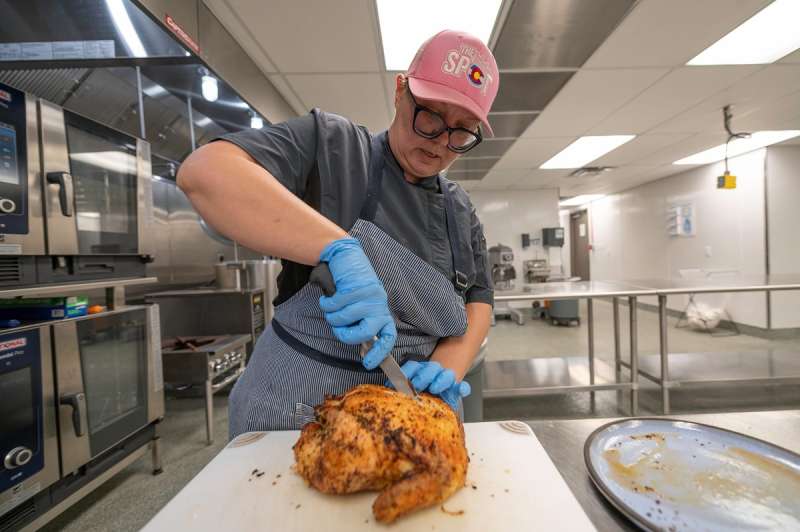
“Chile’s been grown in this area since time immemorial, and our farmers in Pueblo go back six generations,” said Mo Montgomery, a certified executive chef and the nutrition director for the Central Colorado Area Agency on Aging. “So I think as long as we’ve had farmers in Pueblo, we’ve been putting chiles on the dishes.”
Montgomery said for families in Pueblo — and those elsewhere who either have Pueblo roots or invite a Puebloan to Thanksgiving dinner — the dishes that feature chile often steal the show.
“A lot of times relatives look forward to the one dish at the Thanksgiving table that has chile in it,” Montgomery said. “I know that the sourdough stuffing that I did last year … if I show up to my mother-in-law’s without it, they get upset. Now they don’t tell me ahead of time, ‘You better bring that,’ but it’s understood that I better bring that.”
Montgomery said that Pueblo chile is “such a special, unique ingredient” that there’s really no limit to what kinds of foods may benefit from its addition.
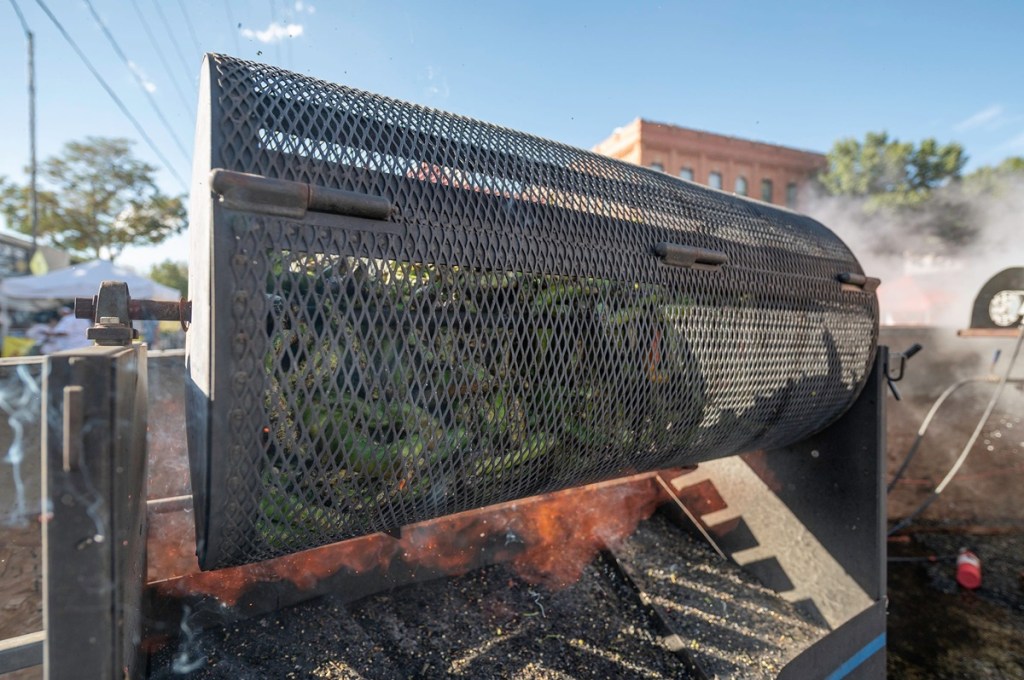
“Chile has always been a very versatile ingredient. It’s really easy to incorporate into just about anything,” she said. “The challenge is really just trying to balance the heat, which changes from year to year.”
Because the heat of a Pueblo chile varies not only from year to year but from one month to the next, Montgomery suggests testing out your chile before adding it to a given dish. If the heat needs counteracting, you can either add it to dishes that have more sugary or creamy characteristics, or try adding some more mild chiles to the recipe, like Pueblo Anaheim or Big Jim chiles.
“Trying to counteract the spice, besides changing up the type of chile, it’s hard to do without really fundamentally changing the nature of the dish,” Montgomery said. “But anything that has sugar in it can counteract the heat. So, like tomatoes naturally have sugar in them, so and they have acid too, so that sort of balances it out. Or if there’s like a really rich cream sauce element — that’s why green chile goes so well with cream sauce. That cream sauce absorbs a lot of the heat that goes into it and helps offset that and makes it taste a little bit more mild.”
If you’re looking for a way to spice up your family Thanksgiving this year, here are three recipes provided by Montgomery and the Pueblo Chile Growers Association, as well as a bonus recipe to make good use of your turkey leftovers.
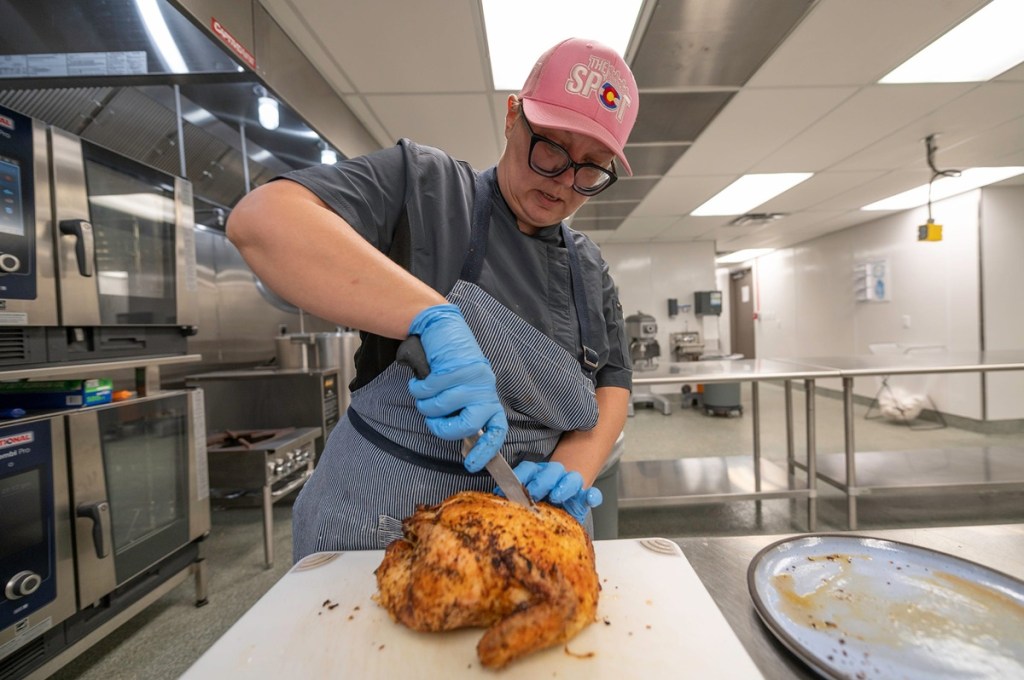
4 Thanksgiving recipes using Pueblo chiles to try out this year
Chile-roasted winter squash
This dish is great as a taco/burrito filling, side dish, or blended into a soup. When winter squash is first harvested, the skin is edible, but the later into the winter you cook it, the drier it will be when you cook it, and may need to be removed. You can do this with a peeler prior to cooking, or by scooping the squash out of the skin with a spoon after it has been cooked.
Ingredients:
Winter squash, such as butternut, acorn, carnival, kabocha, pumpkin, hubbard, delicata, or any white to yellow to orange variety you find at the farmer’s market in late summer and the autumn. This recipe can make as much or as little as you want.
For the seasoning:
- 1 tablespoon Pueblo red chile powder
- 1 tablespoon Pueblo green chile powder
- 1 tablespoon ground cumin
- 1 tablespoon garlic powder
- 2 tablespoons salt
- 1 teaspoon freshly ground black pepper
- ½ teaspoon ground cinnamon
- ½ teaspoon dry oregano
- Extra virgin olive oil
Equipment
- Cutting board and serrated steak knife
- A small and a large mixing bowl
- Large baking sheet
- Parchment paper
Instructions
- Wash the squash: Squash often appears at the farmer’s markets with a little soil still on it. Use a vegetable scrubber and a drop of dish soap and wash the outside of the squash with warm water. Rinse and dry thoroughly. This is when you will peel the squash, if you’re not cooking it with the skin on.
- Cut the squash: Winter squash is really hard but has a hollow interior, so you only need to cut deep enough to get through the walls. I use a serrated steak knife for this so that I don’t lose control of my blade. It’s easy to slip when you have to use force with your knife, but you don’t need a large knife to cut through the squash. Nevertheless, take your time and be careful not to lose control of your knife.
Start by plunging the knife directly into the squash, in a vertical cut. Blade facing down. Cut straight downward, vertically, and continue the cut all the way around and up the other side. Repeat this step to cut into quart wedges. Break off or slice off the stem from the flesh of the squash and discard. If using a butternut squash, use a large chef’s knife to slice through the neck, which isn’t hollow.
- Clean the squash: Using an ordinary spoon, scrape the inside part of the squash clean. Save the seeds for eating or planting later. And discard the inner stringy bits.
- Cut the squash into desired pieces: I like to cut them into thin wedges, or half-rings, about 1-inch wide, which makes removing he skin easy for the eater after it has roasted. But you can cut into bite-sized chunks, especially if it’s peeled prior to cooking and will be used as a filling or pureed.
- Toss the squash in a mixing bowl and lightly coat with olive oil and spice mix. Use as much spice mix as you like. Mix well, ensuring that every surface is coated in oil and spices. Arrange onto a parchment-lined baking sheet in a single layer.
- Bake at 400° for 45 minutes. Serve immediately or cool slightly before pureeing.
Pueblo green chile cornbread
Dry Ingredients
- 10 oz. all-purpose flour
- 10 oz. corn meal
- 8 oz. sugar
- 1 oz. baking soda
- .4 oz. salt
Wet ingredients
- 4 oz. eggs
- 15 oz. milk
Ingredients to fold in
- 4 oz. grated cheddar cheese
- 3 oz. diced Pueblo green chiles
- 4 oz. corn kernels
Equipment
- 4-quart mixing bowl
- Whisk
- Rubber spatula
- Parchment paper
- Casserole dish
- Cooking spray
Instructions
- Mix the dry ingredients in the mixing bowl. Add the wet ingredients and mix with a whisk until just incorporated. Don’t over-mix.
- Gently fold in the cheese, chiles, and corn.
- Lightly spray the casserole with spray, line with parchment paper, and spray the top of the paper. Be sure to spray the side of the casserole dish, too.
- Pour mixture into casserole and bake at 350° F for 13 minutes. Cool and serve.
Cook’s note: The trick to baking this is to measure all ingredients by weight. You can purchase a digital scale at any restaurant supply store.
Pueblo green chile collard greens
Ingredients
- 1 bunch of collard greens, cleaned and chopped, stems included
- 1 large yellow onion
- 5 garlic cloves, smashed
- 2 Pueblo green chiles, smoked
- 2 tablespoons of Jojo’s Sriracha or red wine vinegar
- 2 tablespoons of canola or sunflower oil
Equipment
- Cutting board and knife
- Large pot such as a Dutch oven or enameled cast-iron soup pot
- Wooden spoon
Instructions
- Smoke your Pueblo green chiles: In your backyard smoker, set up a hickory, oak, or fruitwood smoke on low heat. Spread the fresh chiles in a single layer of a mesh mat. Smoke for about an hour, until chiles are tender and have developed a significant amount of color from the smoke. They will develop a leather-like appearance and texture on the skin. Cool down immediately, and freeze chiles for later use.
- In a large soup pot, sauté the onions and garlic in the oil until onions are translucent and just barely start to take on some color. Add the cleaned, chopped collard greens and mix thoroughly to coat all ingredients in oil.
- Nestle two whole smoked chiles in the middle of the pot and cover with water. Simmer for 1 hour, stirring occasionally.
- After the pot has simmered for an hour, taste for salt and pepper. Add Jojo’s Sriracha or red wine vinegar, and adjust seasoning as needed.
Cook’s note: The unique feature in this recipe is that it calls for Pueblo green chile to be smoked prior to cooking with the greens. The best way to do this is to smoke a whole batch of Pueblo green chiles in a standard smoker on low for about an hour. The smoked chiles add heat to the dish, but also a rich complexity with the smoke flavor. If you can’t smoke your chiles, you can use roasted Pueblo green chiles and add some smoked ham hock or bacon to the dish. Smoked salt works, too.
Pueblo chile turkey gumbo
This is a favorite to make with Turkey leftovers after Thanksgiving or any other holiday meal. There are a few ingredients that make this recipe really special — most of all, Pueblo green chiles. It’s also really important to use homemade turkey stock and the meat from the holiday turkey.
This recipe also calls for Klobasi, a smoked pork sausage made by Slovenian and Italian families in Pueblo.
For an extra layer of flavor, buy the shrimp with the shell-on and peel at home, saving the shells. When you heat the turkey stock, add the raw shrimp shells to the stock and simmer for 20-30 minutes before straining and using. This will give you next-level flavor that nobody will argue with.
Note: Most gluten-free flour substitutes, even rice flour, make a good roux, so they can be substitutes if you are making this gluten-free.
This makes a large batch, but it freezes well. In order to freeze, first cool the mixture down to 70°F in 2 hours or less. I do this by placing the pot in a sink full of ice water and stirring it frequently. You can also add ice directly into the gumbo once it has started to cool, but be careful not to water it down too much. Once the mixture is 70° or lower, it can be scooped into freezer bags and laid flat to freeze.
Makes approximately 2 gallons, or sixteen 16 oz servings.
Ingredients
- ½ cup all-purpose flour
- ¾ cup canola oil
- 2 cups diced onion
- 1 cup diced celery
- 1 cup diced Pueblo chile
- 3-4 tablespoons minced garlic
- 2 tablespoons (or to taste) Cajun seasoning
- 4 tablespoons (or to taste) Jojo’s Sriracha or other hot sauce
- 1 cup diced okra, fresh or frozen
- 4 quarts turkey stock
- ½ pound raw shrimp, peeled and deveined
- ½ pound sliced Klobasi
- 2 cups shredded cooked turkey
- Salt and pepper, to taste
Equipment
- Cutting board and large knife
- Large soup pot with a thick bottom, preferably an enameled cast iron
- Large stock pot with at least 5-quart capacity
- Ladle, wooden spoon, and whisk.
Instructions
- Make a brown roux by heating flour and oil together in a pot over medium heat. Cook gently, careful not to let it burn, until it’s a dark caramel color, almost as dark as melted milk chocolate. This can also be done with the enameled cast iron, in the oven, at a low baking temperature, checking and stirring frequently.
- Meanwhile, heat turkey stock to a simmer. Keep hot right at a simmer until it’s ready to add to the gumbo. If you have shells from the shrimp, this is the time to add them to the stock. You will need to strain them out before adding to the gumbo later in the recipe.
- Keeping the heat on medium, and add the onions and celery to the roux. Cook until soft, about 5-10 minutes.
- Add Cajun seasoning, Pueblo chiles, and garlic; stir and cook in the roux until fragrant, about 5 minutes.
- Add in the hot stock, whisking to ensure the roux doesn’t get lumpy. Bring to a simmer.
- Add okra and stir well.
- Simmer 10-20 minutes, season to taste.
- Add Klobasi, shrimp, and turkey. Bring back to the boiling point and continue to simmer gently for another 5-10 minutes.
- Season to taste with salt and black pepper. Add your preferred hot sauce to taste, preferably one that is made with Pueblo chiles.
- Serve immediately with hot white rice and more hot sauce.
Chieftain Editor Zach Hillstrom can be reached at zhillstrom@usatodayco.com or on X at @ZachHillstrom. Support local news; subscribe to the Pueblo Chieftain at subscribe.chieftain.com.
This article originally appeared on The Pueblo Chieftain.
Related: Find Thanksgiving 2026 dinner bundles at Colorado grocery stores