Reporting by Zach Hillstrom, Pueblo Chieftain
More than three months after it began, an Aspen Acres Fire investigation has determined what sparked one of the largest and most destructive wildfires in state history.
In a report obtained by the Chieftain through an open records request, fire investigators with the Colorado Division of Fire Prevention and Control (DFPC) wrote that the blaze began after an aspen tree fell onto energized power lines during a wind event on June 29.
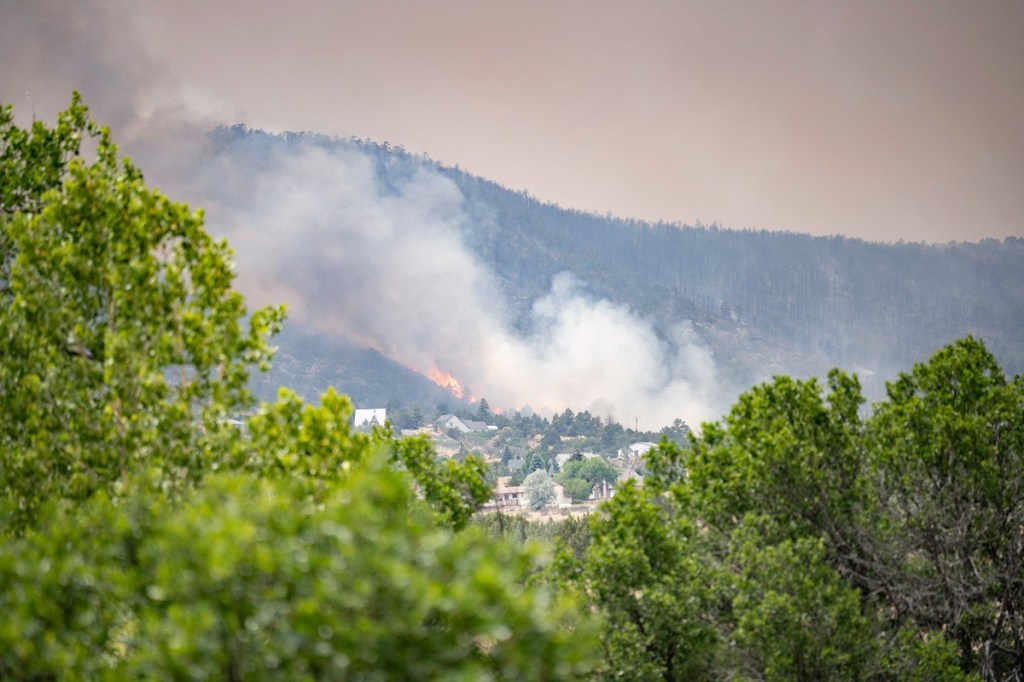
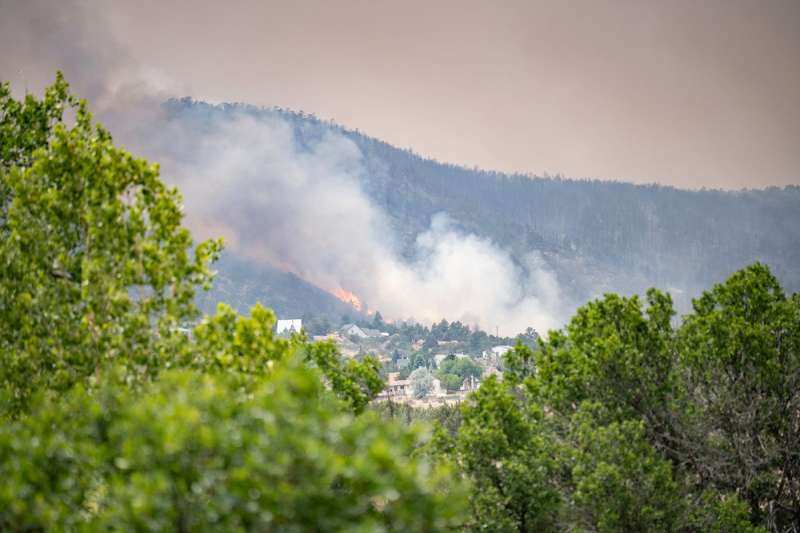
The fire began at the base of a hill west of Colorado Highway 165 along utility pole lines that parallel the state highway.
“Immediately following the start of the fire, flames primarily spread west up the hill and south,” Josh Dreher, the primary DFPC investigator, wrote in the report. “As the fire progressed, the flame front moved east and north from the general area of origin. The advancing fire moved east crossing CO-165 and west, northwest.”
What the Aspen Acres Fire investigation determined
Investigators — including Dreher for the DFPC and United States Forest Service Investigator Earl Huie — determined the fire originated approximately 200 feet west of Highway 165, southwest of the intersection of Highway 165 and Custer Drive, shortly before it was first reported at 5:39 a.m.
“Located in the general area of origin is a series of utility poles that carry power along conductors at the top of the pole,” Dreher wrote.
Dreher wrote that amid high winds, an aspen tree was blown over and uprooted at the base before contacting energized conductors, also known as power lines.
“The energized conductors provided sufficient heat energy to elevate the tree bark and nearby vegetation to a point that would support combustion,” he wrote.
“Melted aluminum was observed under the area where the conductor contacted the tree and presented with melting. The melted aluminum dripping from the conductor should also be considered as contributing to the ignition of the fire.”
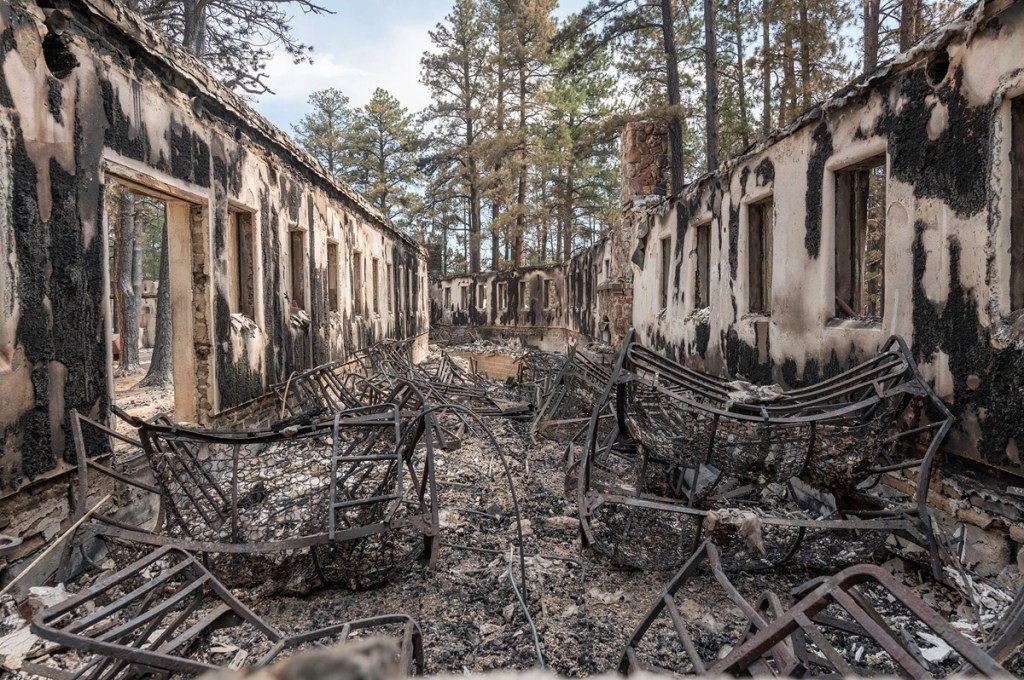
The report identified the high winds as a significant contributing factor in the rapid spread of the fire.
The Rye Fire Department was dispatched to the scene around 5:39 a.m. and was the initial agency to respond.
In addition to the site on Highway 165 and Custer Drive, the investigators also examined a separate location near the end of Silvercliffe Drive, where a photograph shared with investigators showed a tree in contact with power lines.
After studying fire patterns, photographs and witness statements, Dreher concluded that location was not where the Aspen Acres Fire originated.
What witnesses saw at the start of the fire
Fire investigators spoke to two residents who described what they saw at the beginning of the fire.
One of them said he awoke to his lights flickering in his house and his generator turning on around 5:30 a.m.
He said he stepped out of his residence to look around and could smell smoke.
The man said he received a phone call from his neighbor, who lives north of his property, and his neighbor said he too observed smoke south of the Aspen Acres Campground on the west side of Highway 165.
The witness said after he ended the call with his neighbor, he immediately drove to the area where they observed smoke to “size up the fire,” investigators wrote in the report.
When the man arrived in the area of Highway 165 and Custer Drive, he said he saw fire and smoke in the tree line along the power lines.
He told investigators that by the time he arrived at that location, the fire had already “spotted” to the east side of Highway 165.
After evaluating the area where the fire was observed, Dreher wrote that “fire effects, fire patterns, and an aspen tree resting on conductors, indicated the fire originated in this area.”
Lightning, smoking materials and other causes ruled out
In the report, investigators said they evaluated four potential events that could have caused the fire: lightning, discarded smoking material, the possibility that the fire was intentionally set, and electrical/utility lines.
Through their probe, investigators were able to rule out lightning, smoking materials, and intentional ignition.
There were zero cloud-to-ground lightning strokes within 5 miles of the area from June 28 through June 30, according to a STRIKEnet lightning report cited in the investigation.
No evidence of smoking materials were in the general origin area, and given the fuel bed and configuration, temperature, humidity and overall time, “a fire associated with smoking material would be inconsistent and not viable given the data collected during this investigation,” Dreher wrote.
He also stated that an open flame, such as candles, matches, lighters, pilot lights, and oil lamps, could also be excluded as a cause of the fire.
Dreher wrote that the ignition of fire, caused by arcing and/or sparks from a short circuit of conductors, may occur “due to high winds, contact with vegetation, equipment failure, or human or animal contact,” and sometimes several of those factors combine to spark a fire, “such as wind blowing vegetation into contact with the electrical equipment.”
“An analysis of the overall fire patterns displayed fire originating in a single location under the section of an aspen tree and where the arcing and/or sparks from conductors, the burning of combustible materials such as tree bark or the wood itself and coming in contact with items such as trees or vegetation,” Dreher wrote.
“Fire pattern indicators displayed a low intensity fire spreading out in a circular pattern from the ignition site and then moving laterally north and south, backing to the east and advancing to the west as the fire grew in intensity.”
Where things stand with the Aspen Acres Fire
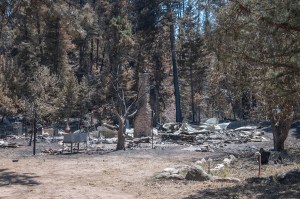
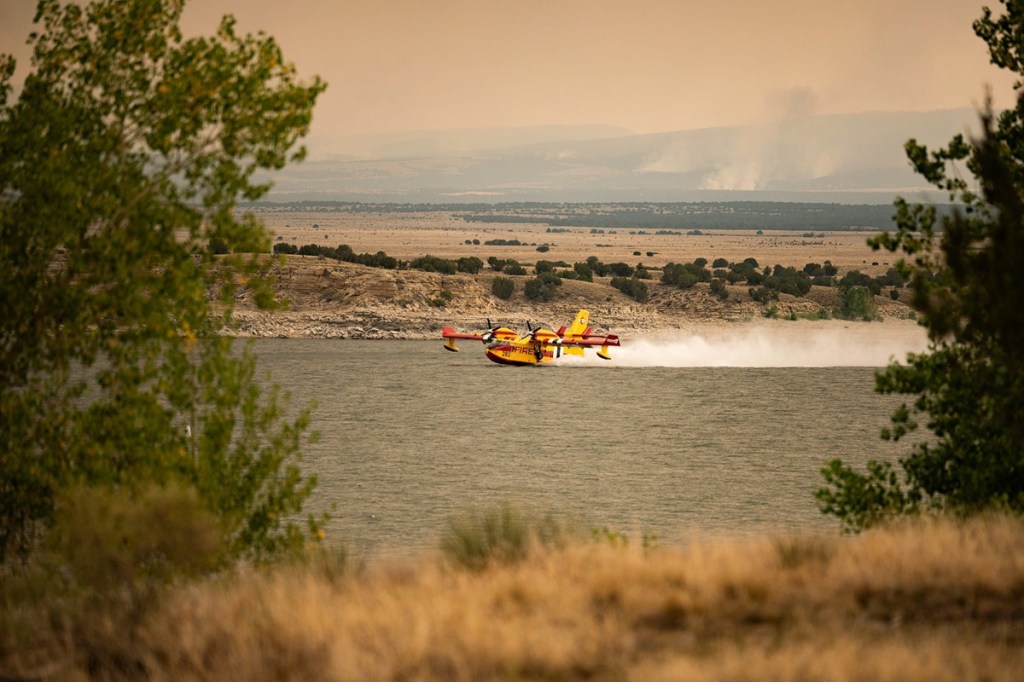
The fire, which is still active, was 82% contained at 102,007 acres as of Oct. 12. It is the seventh largest wildfire in state history in terms of acres burned, as well as the fifth-most destructive in terms of homes lost.
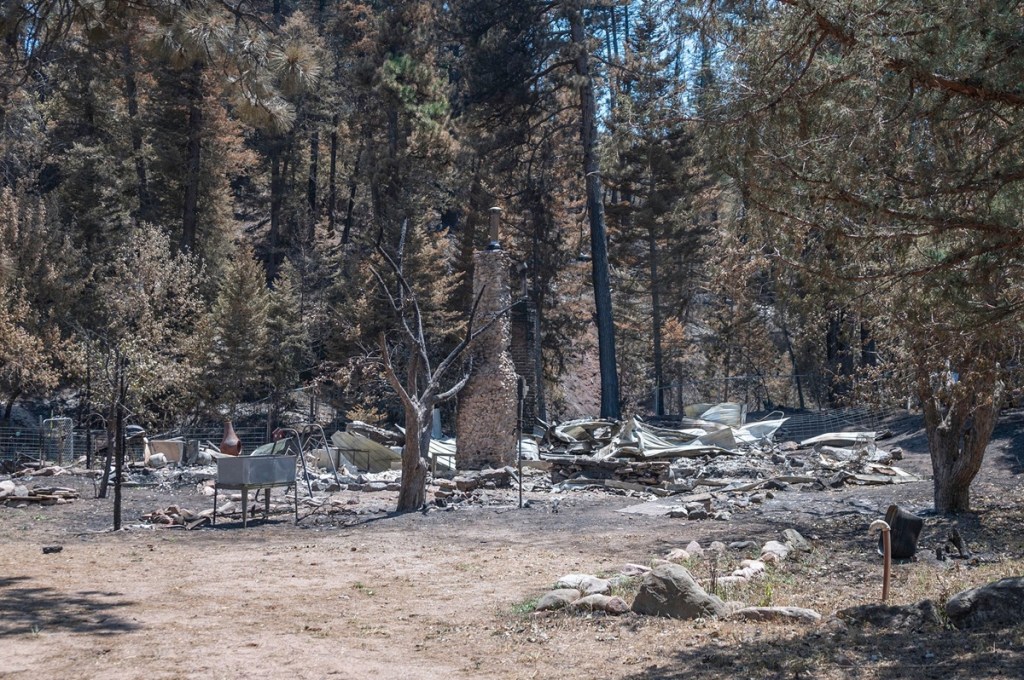
The fire destroyed 324 homes and more than 850 total structures across Pueblo and Custer counties, making it Colorado’s fifth-most destructive wildfire of all time in terms of homes lost, and the state’s most destructive since the 2021 Marshall Fire.
Around 11,600 residents across Pueblo, Custer, and Fremont counties were evacuated at the height of the fire.
Chieftain Editor Zach Hillstrom can be reached at zhillstrom@usatodayco.com or on X at @ZachHillstrom. Support local news; subscribe to the Pueblo Chieftain at subscribe.chieftain.com.
This article originally appeared on The Pueblo Chieftain.
Related: Colorado denied additional FEMA aid for Aspen Acres Fire recovery