Officials with the National Park Service are drafting the first long-term plan for Amache National Historic Site, preserving what’s left of a Colorado incarceration site where Japanese Americans were held during World War II after being forcibly removed from their homes on the West Coast of the United States.
According to the National Park Foundation, survivors who were held at Amache, also known as Granada Relocation Center, as well as their descendants and members of the Amache Preservation Society were instrumental in obtaining the initial National Historic Landmark designation and advocating for the site to become part of the National Park System.
Now the National Park Service (NPS) is seeking public input in a slate of town hall meetings in Colorado and California in November. Following a virtual meeting on Nov. 6, the first in-person meeting will be held near the Amache site at the Granada Community Center in Granada on Nov. 9, followed by a meeting at the Tri-State/Denver Buddhist Temple in Denver on Nov. 12. In-person meetings run from 6 p.m. to 8 p.m.
Find more details about each meeting, including a registration link for the virtual meeting, on this NPS webpage.
Meetings will also be held in Sebastopol and Gardena, California, on Nov. 17 and Nov. 19, respectively. Those who can’t make it can submit comments online through Dec. 3.
“Public input is essential to shaping Amache’s future and ensuring we preserve its history for generations to come,” stated Eric Leonard, superintendent of the High Plains Group, which includes Amache National Historic Site, in a release. “We invite survivors, descendants, partners, and the public to share their perspectives on how we can best protect this important place and share its stories.”
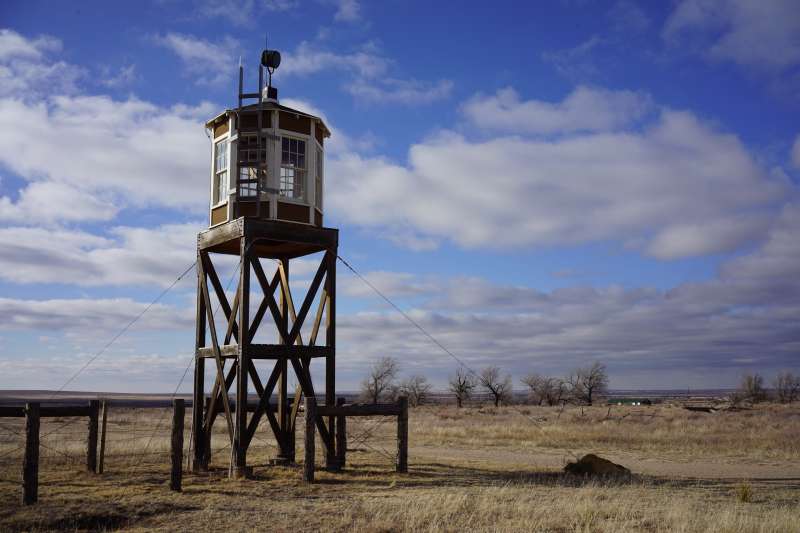
Today, the Amache National Historic Site consists of a historic cemetery, a monument, concrete building foundations, the historic road network originally built for the camp, and several reconstructed and rehabilitated structures from the camp era, according to the National Park Foundation.
Though most of the original buildings were razed, Amache is said to be one of the best preserved out of 10 sites where innocent Japanese Americans were detained during the war. About 10,000 people of Japanese ancestry, two-thirds of them American citizens, were held at the Amache site without cause.
At its peak population in 1943, 7,310 people were detained in Amache, making it the 10th largest city in Colorado at the time, reported the National Park Foundation.
READ MORE: The 9 freakiest UFO sightings in Colorado history