Voters considered 14 Colorado ballot measures in the 2026 midterm election weighing in on criminal sentencing, transgender policies, income taxes, conservation and congressional districts.
Several measures have now been called, others remain too close to call as ballots are tallied.
Proposed amendments to the state constitution need at least 55% voter approval whereas Colorado statutory propositions generally pass with a simple majority.
Which Colorado ballot measures are leading?
Proposition 133 (Passed): Called for by the Associated Press with roughly 62% support, the measure makes child sex trafficking a class 1 felony, while expanding the legal definition of the crime.
Proposition NN (Passed): Approved with roughly 56% support, allowing the state to retain revenue otherwise refunded under the Taxpayer’s Bill of Rights (TABOR) to fund K-12 education and other public programs for the next decade.
Proposition 132 (Leading): Ahead with 53% support, according to CPR, this measure makes possession of any amount of fentanyl a felony and establishes an eight-year mandatory minimum for certain distribution offenses.
Propositions 134 & 135 (Leading): Measures restricting transgender youth were both ahead. Prop 134 limits school sports participation to biological sex, while Prop 135 bans certain gender-related surgeries for minors as well as public funding for them.
Amendment 87 (Leading/Passing): Ahead with about 51% support, it replaces the state’s flat income tax with a graduated system—lowering rates for incomes under $500,000 and raising them for higher earners. A competing measure, Proposition 136, which caps the income tax rate at 4.4%, trailed at 48%. The two proposals were still close Wednesday afternoon, according to CPR’s tax-measure results report.
Proposition 132 (Leading): Ahead with 53% support, this measure makes possession of any amount of fentanyl a felony and establishes an eight-year mandatory minimum sentence for certain distribution offenses.
Propositions 134 & 135 (Leading): Measures restricting transgender youth were both ahead. Prop 134 limits school sports participation to biological sex, while Prop 135 bans certain gender-related surgeries for minors as well as public funding for them.
Which Colorado ballot measures are trailing?
Voters rejected several high-profile constitutional amendments:
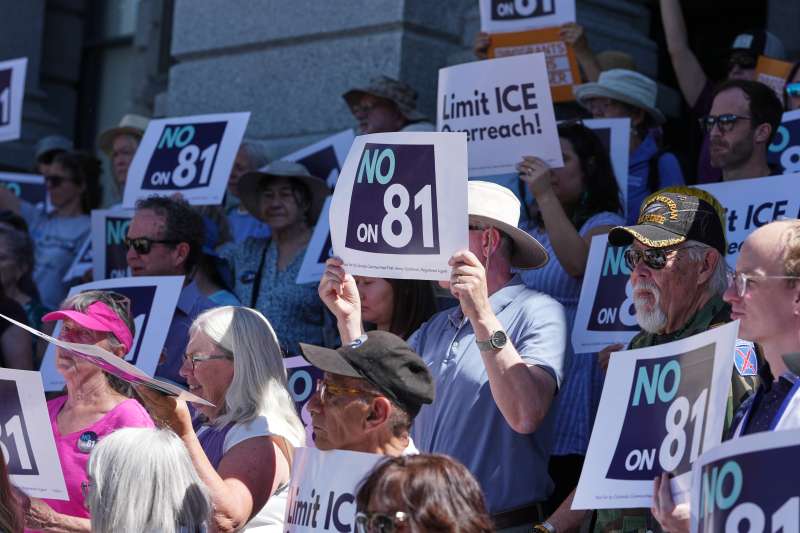
Amendments 81, 82, & 83 (Defeated): The AP called defeats for measures requiring local police cooperation with federal immigration authorities (81), establishing a constitutional right to natural gas (82), and making hunting and fishing the state’s preferred wildlife management tools (83).
Amendment 84 (Defeated): About 63% of voters rejected a requirement for mail-in voters to submit partial ID numbers alongside their signature.
Amendment 85 (Failing threshold): Though roughly 51% of voters favored requiring ballot measures to be written at an eighth-grade reading level, the amendment is poised to fail because it fell short of the 55% threshold required for constitutional changes, the New York Times reported.
Amendment 86 (Trailing): Unlikely to pass, CPR’s reporting noted, this measure sought new restrictions on mid-cycle congressional redistricting.
What about Front Range passenger rail?
Though featured alongside statewide questions in several election roundups, Ballot Issue 7A appeared only on ballots in the Front Range Passenger Rail District, making it a separate regional vote.
Voters seemingly approved the measure, which creates a 0.333% sales tax to help fund the southern portion of the Colorado Connector, the planned passenger rail service between Pueblo and Fort Collins, alongside service and station upgrades.
Results remain unofficial until certified by the state.