Reporting by Rebecca Powell and Erin Udell, Fort Collins Coloradoan
Fort Collins City Council voted Oct. 20 to enact a six-month moratorium on the development of most data centers.
The data center moratorium vote was unanimous, and as long as the proposal gets final approval following a second reading from council on Nov. 3, the moratorium will be in effect until April 6.
The moratorium applies to any data center proposed as a primary use and to data centers that are considered an accessory to another primary use and use more than 10 megawatts of power.
The pause will give city staff and council time to develop standards for the land use code, which currently doesn’t address data centers at all.
The city’s working definition, according to the ordinance, is “a building, portion of a building, or site whose primary function is housing computing, storage, or network equipment that processes or transmits data for third parties or for operations not located on the premises.”
A council work session is planned for January, with a possible vote coming in March.
What residents had to say about a data center moratorium
During public comment on the moratorium, a proposal for a facility on Midpoint Drive came up.
Mark Williams, of Prime Holdings, the owner of a self-service storage facility at 2120 Midpoint Drive, said he is seeking an addition of use for the facility to become an “inference point.”
Williams contends this project is not a data center, and he asked council to exempt this project from the moratorium.
“This facility will benefit the community,” he said.
Robert Moser, of Prime Holdings, said the project on Midpoint would use one or two buildings on the site to deliver low-latency inference infrastructure that delivers “vital applications” to hospitals and universities for things like 911 triage, university research or robotics surgery.
“It is not an AI data center, this is digital modern infrastructure that is needed to answer any application that needs an immediate response,” Moser said, adding that has nothing to do with producing a language or storing data.
He said he got into this business after a family member needed robotic surgery but no hospital could perform it due to the lack of low-latency being delivered in the United States.
“We do not use any potable water, we have zero discharge out of it,” Moser said.
The power would range from 10 to 20 megawatts and it’s called upon when, for example, a hospital makes an inference for that robotics surgery.
The project has been through a conceptual review, which is not a formal application process, city planning director Clay Frickey said.
Under the moratorium, a formal application for the project could not be accepted, he said, and council did not carve out an exemption.
Without a moratorium, the project would be subject to a major amendment type 2 review. It would go before the Fort Collins Planning and Zoning Commission for a public hearing and be the center of at least one neighborhood meeting, Fort Collins Development Services Coordinator Todd Sullivan said at the project’s Oct. 1 conceptual review meeting.
Moser told planning staff Oct. 1 that the “inference point” could employ around 15 to 25 employees with salaries for those positions in the $90,000 to $100,000 range.
“This is a huge economic driver … where companies will relocate or expand to (get to this area),” Moser told planning staff.
Some council members have said they do not want data center rules to be one-size-fits-all.
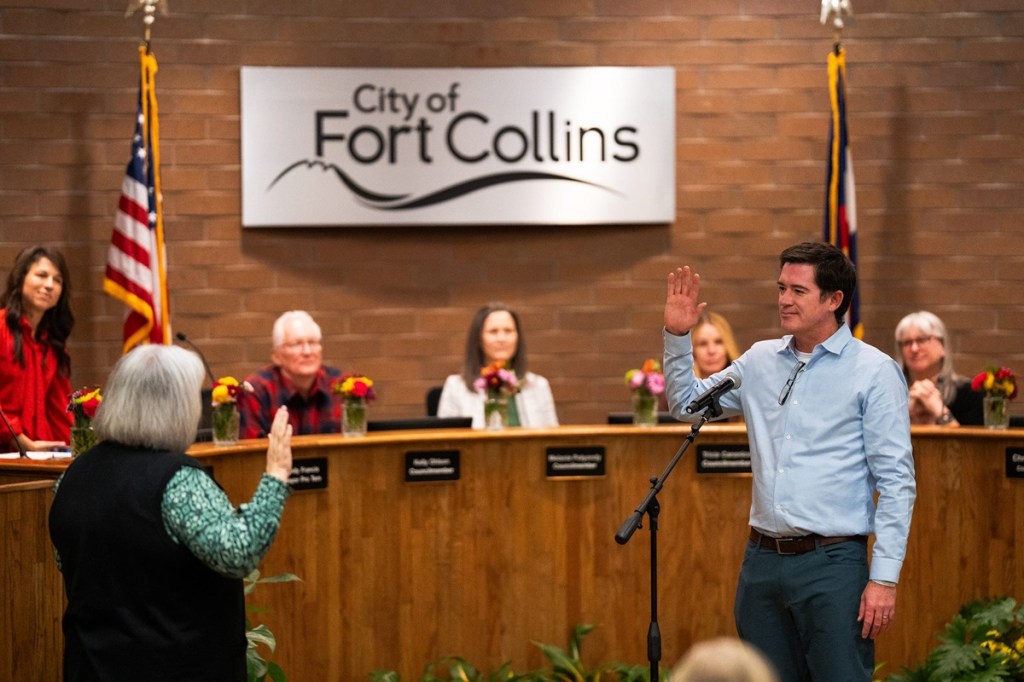
Council member Josh Fudge said the regulations should make room for projects perhaps like the Prime Holdings proposal that have a beneficial use and are in line with the city’s values, projects “that aren’t necessarily the AI that we think of … the tech billionaires trying to run our lives.”
The work session will provide a chance to discuss exactly what it is the city doesn’t want, Mayor Pro Tem Julie Pignataro said, adding that AI does not necessarily equal data center. The discussion will go into energy use, land use, the best use of land, as well as AI, but AI is only a part of it, she said.
This article originally appeared on Fort Collins Coloradoan.
Related: Mountain residents vow to ‘fight tooth and nail’ to save their public schools