Reporting by Miles Blumhardt, Fort Collins Coloradoan
After killing five wolves in recent months due to chronic depredations of livestock, Colorado Parks and Wildlife announced it is suspending its lethal removal of wolves despite ongoing livestock losses.
The agency said it made the decision after evaluating survival rates of wolves in Colorado, the unknown opportunity to capture and release more wolves this winter and other biological factors, according to an agency news release Sept. 30.
The announcement comes after ranchers told the Coloradoan on Sept. 30 that there were three additional confirmed wolf attacks of cattle on three different ranches by the One Ear pack in Grand and Jackson counties.
Those depredations were confirmed on the agency’s wolf depredation page, showing a calf was attacked Sept. 18 in Jackson County and two more calves were attacked Sept. 22 and 29 in Grand County.
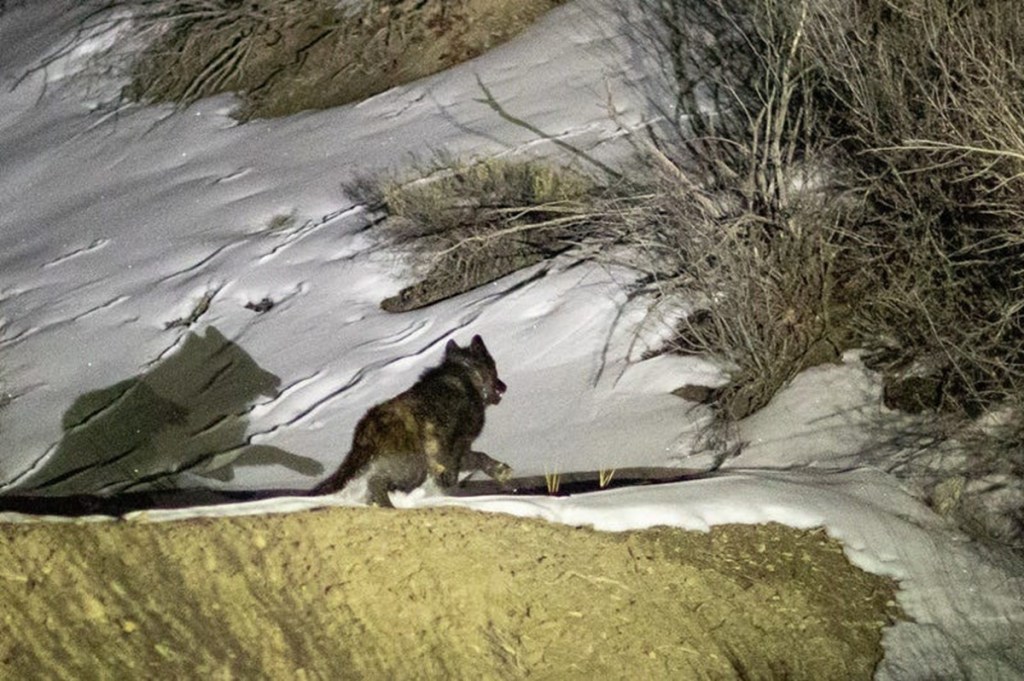
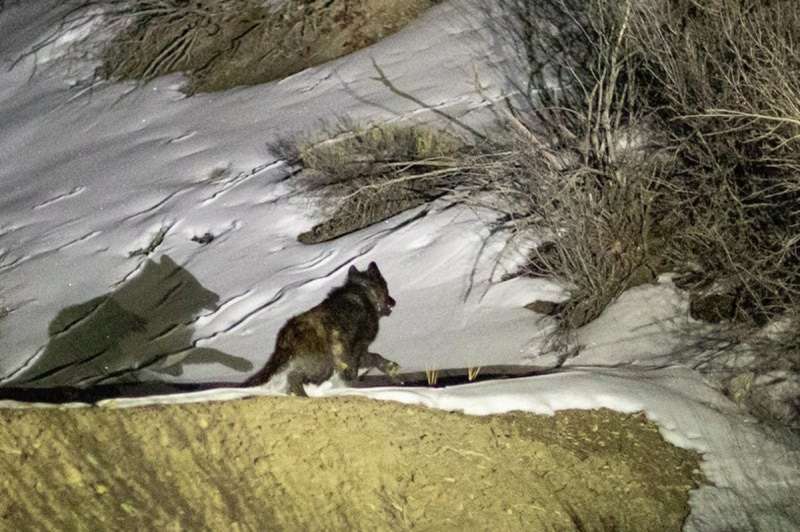
That brings this year’s total confirmed livestock depredations to 61. There were 37 depredations in 2025, resulting in claims awarded to ranchers of around $1 million.
The state defines chronic depredation as three depredations by the same wolf or wolves in a 30-day period at which time the agency has the option of lethally removing the animals.
Two of those five wolves lethally removed were from the One Ear pack, which rancher Shawn Foster told the Coloradoan were involved in last week’s attacks and which he requested the agency to remove the entire pack.
The last lethal removal by the agency was of the second One Ear pack member Sept. 9
“CPW has a proven track record of breaking their own rules when things aren’t going in their favor,” said Foster, who has had multiple confirmed depredations by the One Ear pack, including last week. “If I would break the rules they would prosecute me to the fullest extent of the law.”
The agency news release stated it will evaluate future lethal removal of wolves on a case-by-case basis “using a very conservative approach to address the concern that population growth may not occur this biological year,” which ends March 31, 2027. It added it will work with stakeholders to evaluate its chronic depredation directive and make revisions by April 1, 2027.
“We applaud CPW for suspending lethal control for livestock losses at this critical moment for Colorado’s wolves,” Delaney Rudy, Colorado Director for the Western Watersheds Project, stated in a Sept. 30 email. “With survival rates running low, disease concerns in the population, and no foreseeable source population for this year’s reintroductions, every wolf on the landscape matters, and the best available science does not support lethal control as a solution to chronic depredation.”
Concerns grow over reintroduced wolves in Colorado
The agency stated in its news release concerns about the state’s wolf population prompted it to announce the current estimated wolf population, which previously has only been announced at the end of March in its annual report.
The release stated the agency estimates 45 wolves as of Sept. 24, including 20 pups and 25 adults. The agency estimated as of the end of March the state had 32 adult wolves plus an unknown number of pups.
Adult wolf survival in Colorado between April 1, 2025, and March 31, 2026, was 61%, compared to the 75% survival rate more typical of a wolf populations not hunted or trapped, according to new release. Typical survival rates of pups range 50% to 60% in western wolf populations.
Four packs produced pups this spring, the agency said. A fifth pack of four siblings are traveling together after the pack’s breeding male died during a Colorado Parks and Wildlife capture operation and whose mother was shot by a ranch hand.
But the killing of five wolves, all yearlings, plus the loss of another wolf, which the agency hasn’t announced cause of death, and inability to secure more wolves from other states and tribes has caused concern.
“Right now, we’re in a critical moment for wolf restoration in Colorado,” Colorado Parks and Wildlife Director Laura Clellan said in the release. “Our current genetic analysis demonstrates that the wolf population has high diversity, indicating that inbreeding is not a hurdle to wolf recovery. While this is promising news for the program, achieving a successful reintroduction effort and a self-sustaining population of wolves will require doing everything we can to ensure the survival of existing wolves in the state.”
The effectiveness of the agency’s decision to incrementally kill yearling wolves has been questioned by wolf experts, who believe the practice removes young wolves but doesn’t remove the problem.
The state wolf recovery plan calls for a minimum self-sustaining population of 150 to 200 wolves.
Tim Ritschard, president of the Middle Park Stockgrowers Association and Grand County rancher, told the Coloradoan the agency’s suspension of lethally removing wolves is the agency’s latest deviation of the wolf plan and signals further concerns about the program.
“What this tells me is they likely don’t have a source for more wolves this year,” Ritschard said. “If they can’t get wolves, they suspend lethal removal, which goes against the agreed-upon chronic depredation definition.”
Colorado has been turned down by multiple western states to serve as a source of wolves for its voter-approved reintroduction program for various reasons.
The Colville Tribe in Washington agreed to give Colorado wolves but then rescinded the offer because of a lack of wolf management memorandum of understanding between Colorado Parks and Wildlife and Colorado’s Ute Mountain Ute Tribe. The two sides eventually signed the agreement Aug. 18.
The U.S. Fish and Wildlife Service also dealt a blow to Colorado’s wolf capture efforts when it told the state it could no longer capture wolves in Canada, which the state did in 2025, due to terms of its agreement with the state.
This article originally appeared on Fort Collins Coloradoan.
Related: Recent Colorado Springs bear death highlights change to ‘wildlife luring’ law