A presentation during the Sept. 14 meeting of the Upper Colorado River Commission underscored the uncertainty confronting Colorado River managers as the 2007 Interim Guidelines—rules that have governed coordinated operations of Lake Powell and Lake Mead—expire at the end of the 2026 operating year on Sept. 30
Worsening drought conditions have led to declining reservoir levels and a crisis on Lake Powell, which reached record lows this summer.
In August, after the seven basin states failed to come to an agreement following two years of negotiations, US Secretary of the Interior Doug Burgum issued a record of decision that included new operating guidelines for how the Colorado River will be managed after the expiration of the current agreement.
The decision provides criteria to determine how much water can be released from Lake Powell to keep it at a minimum level while also reducing the amount of water released to the Lower Basin states (California, Arizona, Nevada) by 1.25 million acre-feet per year. A single acre-foot of water equals 326,000 gallons.
The Sept. 14 meeting was the first time the Upper Colorado River Commission—which represents the Upper Basin states of Colorado, New Mexico, Utah, and Wyoming—had gathered since Burgum’s decision.
During the meeting, representatives of each state gave updates on the water conditions in their respective coverage areas, “and that’s where things got really grim,” wrote Marianne Goodland with The Denver Gazette.
Colorado Commissioner Becky Mitchell explained that conditions have led to the curtailing of water rights that date back to the 1860s, the Gazette reported.
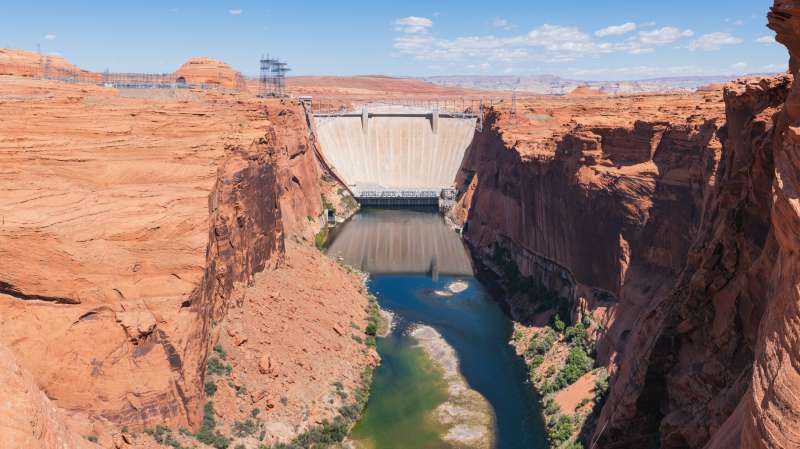
On the day of the meeting, Lake Powell’s elevation was reported at just over 3,516 feet. The elevation needs to be at a minimum of 3,470 feet in the Glen Canyon Dam area to generate power.
Following its enactment on Oct. 1, Burghum’s plan aims to maintain a minimum elevation of 3,510 feet on Lake Powell to support continued operational reliability at the dam.
The Upper Colorado River Commission will not meet again until November, when they’ll receive updates on how the plan is being rolled out.
RELATED: Thousands of fish die in inlet as Boyd Lake water levels drop