Reporting by Zach Hillstrom and Justin Reutter, Pueblo Chieftain
The innovation behind Pueblo’s beloved chile pepper is set to be immortalized on a special coin produced by the United States Mint.
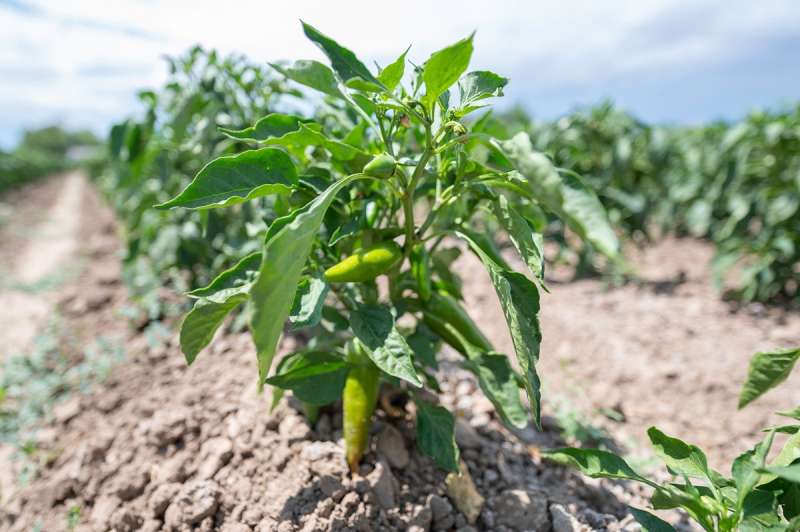
Colorado Gov. Jared Polis announced on Sept. 17 that the Pueblo chile, specifically the immensely popular Mosco variety developed by Pueblo County native Mike Bartolo, has been nominated to be displayed on Colorado’s 2028 American Innovation Coin.
The $1 coins are a multi-year series honoring American innovation and innovators for each of the 50 states, the District of Columbia, and the five U.S. territories.
“The Pueblo Chile represents Colorado’s history, heritage, and strong agricultural roots,” Polis said in a news release. “The Pueblo Chile is simply the very best chile that exists and a key ingredient in delicious dishes across the state and country. The flavorful modern Pueblo chile (Mosco variety) was an innovation of Dr. Mike Bartolo and developed in 1994 through selective plant breeding. This innovation is strengthened by reflecting on the culture and history of the generations of Coloradans before us, and the central role of chile in our culture and cuisine.”
Polis called Pueblo’s famous pepper “part of Colorado’s past, present and future innovation,” and said he looks forward to the final selection for Colorado’s 2028 American Innovation Coin, “so that all Americans can see our Pueblo chile up close in pocket change and collector’s books.”
Colorado nominated seven designs, which were then reviewed by the U.S. Commission of Fine Arts on Sept. 17.
What does the American Innovation Coin look like?
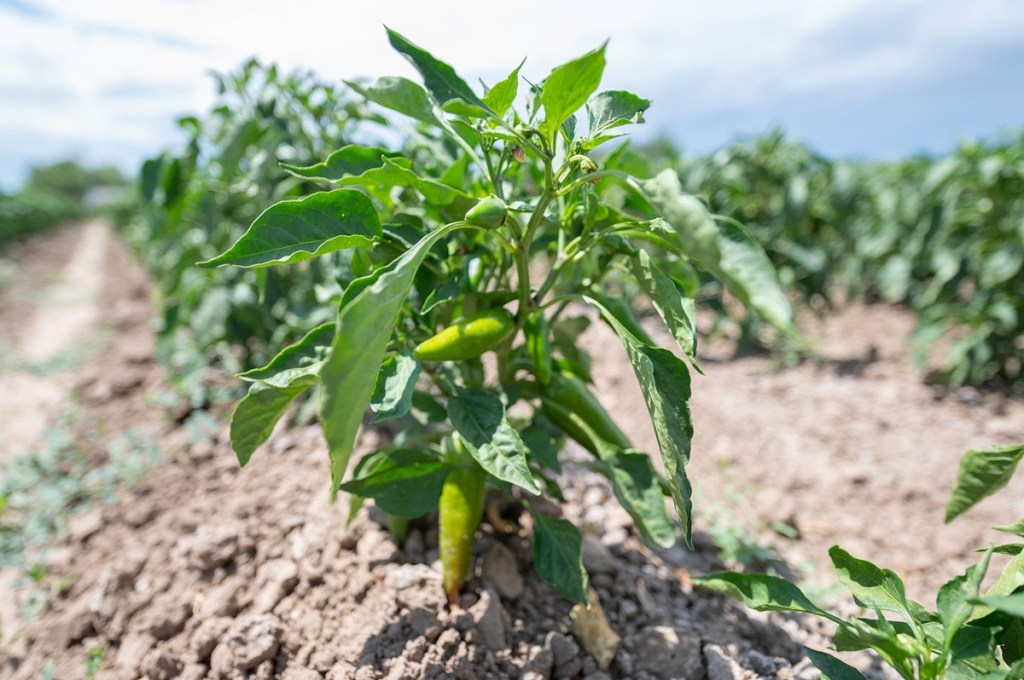
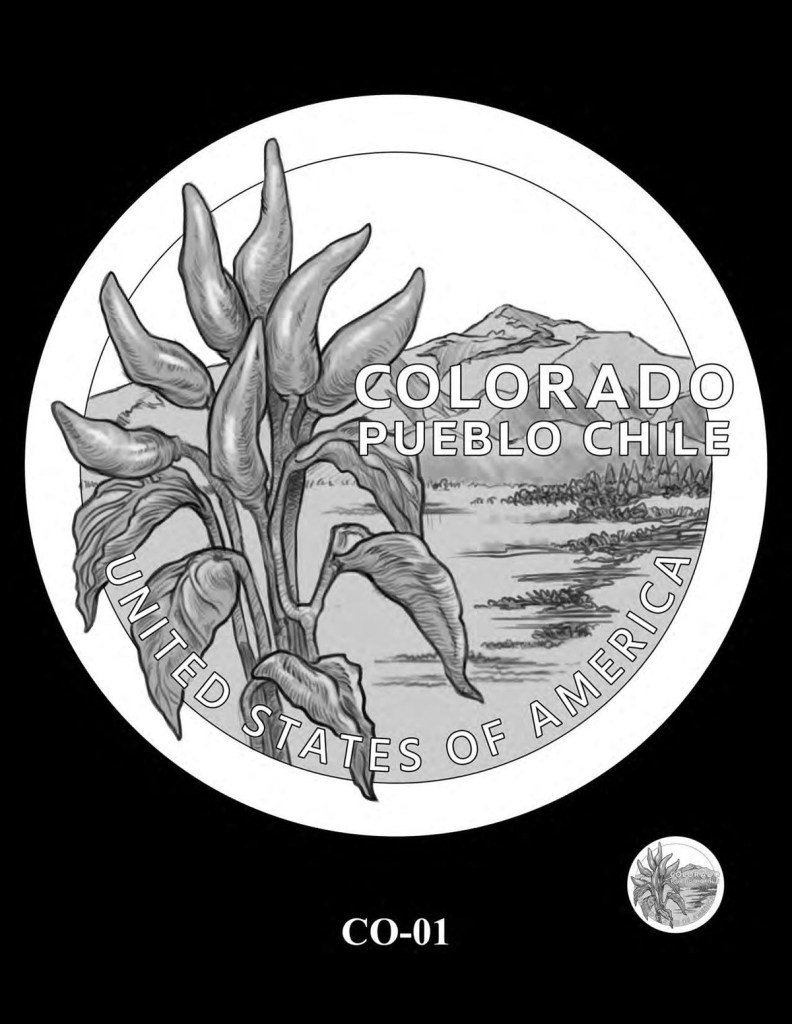
The design labeled CO-01, which shows a chile plant full of mouthwatering mirasol peppers reaching toward the sun alongside the words “Colorado Pueblo Chile” on a mountainous background, was selected as the preferred design.
The governor said that while other ideas were proposed, such as skiing or aerospace innovation, he felt the best way to represent Colorado was with the Pueblo chile.
“I really wanted people to learn about what Pueblo has to offer and experience a bit of our agricultural innovation, and it’s a great point of pride for Southern Coloradans, some of whom have been growing chile for 150 years or more,” Polis told the Chieftain. “It’s a celebration of part of our heritage as well as our future, in a way that brings attention to Southern Colorado.”
The Citizens Coinage Advisory Committee is set to review the design in early October, with a final design to be selected by the Secretary of the Treasury, according to the governor’s office.
How the Mosco Pueblo chile came to be
When Colorado State University researcher Mike Bartolo inherited a bag of chile seeds from his late uncle, St. Charles Mesa farmer Harry Mosco, he began a journey that would help shape the modern Pueblo chile.
Through years of selective breeding, Bartolo developed the Mosco chile, a hotter, thicker-fleshed variety that has since become the dominant strain grown by Pueblo farmers.
Bartolo, a member of the Colorado Agriculture Hall of Fame, told the Chieftain in 2021 that Pueblo chile — which measures at 5,000 Scoville Heat Units, making it hotter than the Hatch, New Mexico, peppers — is more than a crop. It’s a piece of the region’s cultural heritage, passed down through generations of local families.
“Pueblo chile is so important to Pueblo as it really is weaved into cultural tapestries and is part of so many good memories of food and family,” he said.
The governor’s news release noted that chiles have been grown in Colorado since at least the early 1800s.
“Our warm summers and low rainfall are great weather for growing chile. After generations and generations of cultivation in the Pueblo area, a uniquely local variety began to develop, most likely through a combination of natural selection and basic horticulture by the farmers. This was the birth of the very first Pueblo green chiles,” the release states.
“The most common and popular strain is a more recent development. The majority of the peppers you see in Pueblo cuisine are Mosco chiles, a specific variety that has been on the market for just over two decades. The Mosco chile was a labor of love by Dr. Mike Bartolo and his team at the Arkansas Valley Research Center. Dr. Bartolo is a vegetable crop specialist with Colorado State University, and his family has been in the Pueblo area for generations.”
The news from the governor’s office could hardly come at a more fitting time, as the 32nd annual Pueblo Chile and Frijoles Festival kicks off in Downtown Pueblo on Sept. 18, “where New Mexico residents escape up north to buy the superior chiles,” the governor’s office stated in the release.
Fanning the flames of Pueblo’s heated rivalry with Hatch, Polis told the Chieftain that Pueblo chiles are meatier, more flavorful, and overall superior to the Hatch chile, “and that’s why New Mexicans are coming up here to get their chile.”
“The festival attracts people not just from Pueblo, but from across the state and the region,” he said. “I love the Pueblo Chile Festival, the sights, the sounds, the smells, the people, and it attracts people from all across Colorado. It’s a great introduction to the Pueblo community and a great way of sharing our Pueblo chiles and chipotles across Colorado, and with the New Mexicans who come up and get their superior Pueblo chile.”
For the governor himself, the festival is a great way to get Pueblo chiles for cooking, whether in salsa, omelets, or his own unique favorite — the peanut butter, banana, honey, and Pueblo chile sandwich.
“The sweetness of the honey pairs well with the chile, and it’s favorite of us and our kids,” Polis said.
Chieftain Editor Zach Hillstrom can be reached at zhillstrom@usatodayco.com or on X at @ZachHillstrom. Support local news; subscribe to the Pueblo Chieftain at subscribe.chieftain.com. Justin Reutter can be reached at jreutterma@gannett.com or on X @jayreutter1.
This article originally appeared on The Pueblo Chieftain.
Related: Pueblo chiles, Rocky Ford melons safe to eat despite sewage spill